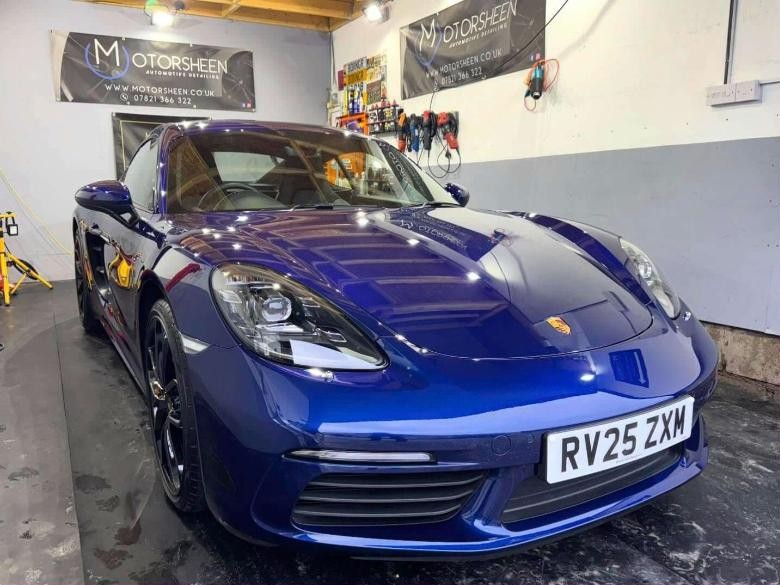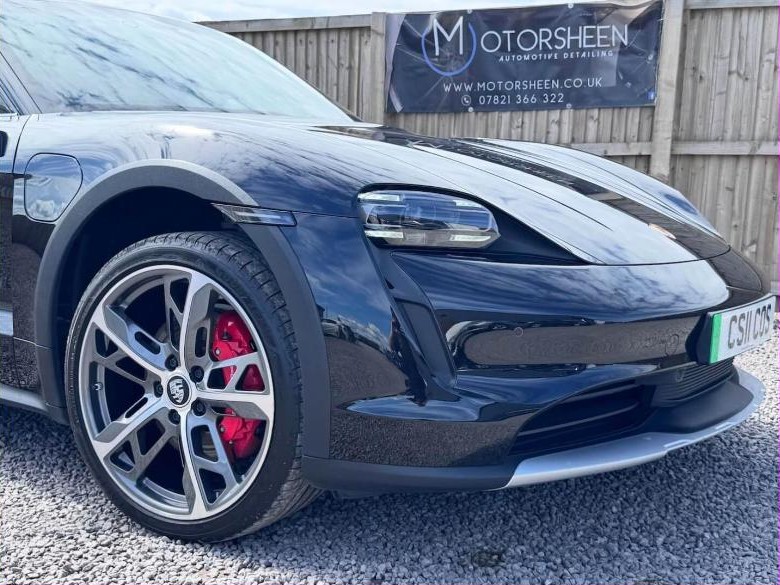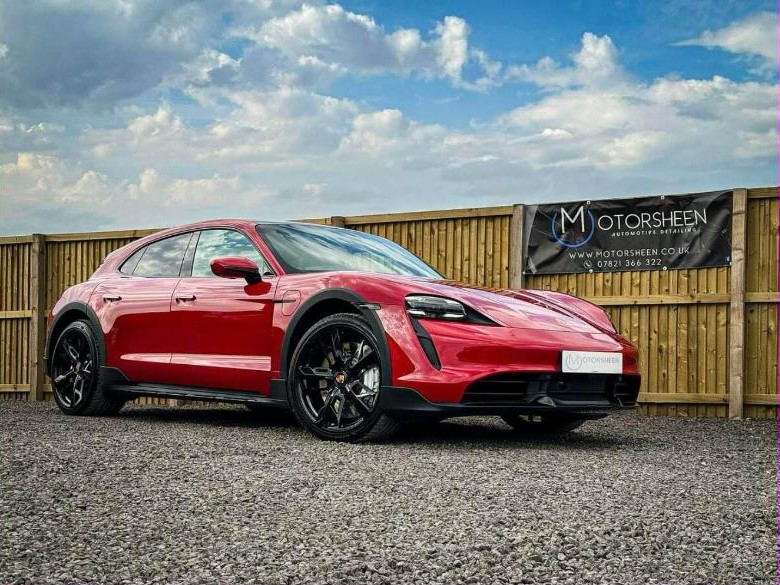
Ceramic coating is one of the most asked about services at our workshop in Larkhall. Owners see the gloss and the water beading on social media, then see the price and quite rightly ask whether it is worth the money. The short answer depends on how you use your car, how long you plan to keep it and what you expect a coating to do.
Below we answer the questions we hear most often, based on more than 12 years of detailing cars across Glasgow and Lanarkshire.
What is a ceramic coating?
A ceramic coating is a liquid polymer, usually based on silicon dioxide (SiO2), that is applied by hand to the paintwork of a car. As it cures, it bonds with the clear coat and forms a hard, thin, transparent layer on top of the factory paint. That layer is far more durable than a wax or a sealant and it is hydrophobic, which means water, dirt and grime struggle to stick to the surface.
You will often see coatings described as 9H. That figure comes from the pencil hardness test, and it simply means the cured coating resists marking from the hardest pencil on the scale. It is a useful measure of hardness, but it does not mean the car is scratch proof.
Is ceramic coating worth it in UK weather?
The UK climate is one of the strongest arguments for a coating. In Scotland especially, a car spends most of the year wet. Winter roads are treated with salt and grit, motorways leave a greasy traffic film on the paint, and rural roads add mud, tar and tree sap. A coating gives the paint a sacrificial barrier against all of it.
- Road salt and grit: the slick surface makes it much harder for salty grime to cling to the paint and lower panels.
- Rain and traffic film: water beads and sheets away, taking a lot of the dirt with it, so the car stays cleaner for longer between washes.
- Bird droppings and tree sap: a quality coating is resistant to chemicals across a wide range, from pH2 to pH12, which buys you time to remove them before they etch the clear coat.
- UV and oxidation: even in Scotland, summer sun fades paint and plastics over time, and the coating helps slow that down.
In our experience, the people who feel the biggest difference are those who drive daily through the winter. Instead of the car looking grey and dull a few days after a wash, it stays glossy and a quick rinse brings it back.
Does ceramic coating really make a difference?
Yes, and it is noticeable from the first wash. Water and dirt slide off rather than clinging to the paint, the car stays clean longer, and washing and drying take a fraction of the time. The gloss and depth of the paint also improve, especially after machine polishing. Where people are disappointed is when they expect a coating to be a force field. It is a hard, slick layer of protection, not armour, so it is worth knowing what it will and will not do before you book.
How much does ceramic coating cost in the UK?
Prices vary a lot, and that is why comparing quotes can be confusing. Across the UK you will see anything from around £200 for a basic one layer application to well over £1,500 for a multi-stage paint correction followed by a premium, multi-year coating. The coating product itself is only a small part of the cost. Most of the price is skilled labour.
The main things that affect the price of a ceramic coating are:
- The size of the vehicle and the condition of the paint.
- How much paint correction is needed to remove swirl marks, scratches and holograms before coating.
- The grade of coating and the number of layers, which decide how long the protection lasts.
- Extras such as glass, wheels, brake callipers and interior leather.
As a guide, our Enhancement Detailing package, which includes full decontamination, a single-stage machine polish and an Angelwax ceramic coating, starts from £395. Our Multi-Stage Paint Correction package, with up to four stages of correction before the coating, starts from £495. Glass packs start from £60 and full wheel and brake packs from £120.
Why is paint correction part of the price?
A coating locks in whatever is underneath it, good or bad. If it goes on top of swirl marks and light scratches, it will make them glossier and more permanent. That is why we always prepare the surface first: a full wash, chemical and clay decontamination to remove iron fallout and tar, then machine polishing to correct the paint. Before any polishing we take a free paint depth reading, so we know exactly how much clear coat there is to work with.
What are the pros and cons of ceramic coating?
The advantages
- Long lasting protection measured in years rather than weeks.
- Deep, glassy gloss that makes the colour look richer.
- Strong hydrophobic behaviour, so the car stays cleaner and dries faster.
- Quicker, easier washing, with dirt, salt and insects coming off with less effort.
- Resistance to chemical staining, bird droppings and UV fading.
- Helps protect the condition and resale appeal of the car.
The disadvantages
- A higher upfront cost than a wax or a sealant.
- It does not stop stone chips, deep scratches or car park dents. Paint protection film is the product for that.
- It still needs a sensible wash routine. Brush car washes and harsh detergents will shorten its life.
- Results depend heavily on the preparation and the installer, so a cheap job can be a false economy.
Is ceramic coating worth it on a new car?
A brand new car is one of the best candidates for a coating. The paint has had the least wear, so it needs less correction, and you protect it from day one. It is worth knowing that new cars are rarely perfect on delivery. Paint can pick up light marring at the factory, in transport or during the pre-delivery wash, which is why we still inspect and refine new paintwork before coating.
Is ceramic coating worth it on a used car or leased car?
For an older or used car, a coating is worth it if you are keeping it and want it looking its best. Paint correction followed by a coating can take years off the look of a tired car. For a leased car, it can make sense if you want to keep it clean and avoid paint related charges when you hand it back. If you are selling the car in the next few months, a thorough valet and a good quality wax or sealant is usually the better value choice.
Is a DIY ceramic coating spray worth it instead?
Ceramic sprays, spray sealants and DIY kits have come a long way and they are a decent step up from a traditional wax. However, they are much thinner than a professional coating, they last months rather than years, and you need to reapply them regularly. They will also only be as good as the preparation underneath. Without a machine polisher and the experience to use it, a DIY coating will simply seal in any swirl marks. If you enjoy detailing and want an easy upgrade from wax, a spray is fine. If you want years of protection and a corrected finish, a professional coating is a different product.
Can you pressure wash a ceramic coated car?
Yes. A pressure washer is one of the best tools for a coated car, because the hydrophobic properties mean a lot of the dirt rinses straight off before you touch the paint. Keep the nozzle a sensible distance from the surface, avoid blasting edges and trim at close range, and follow it with a gentle hand wash. What you should avoid is the automatic brush car wash, which will wear the coating down far more quickly.
Is there anything better than ceramic coating for cars?
It depends what you want to protect against. For stone chips on the bumper, bonnet and mirrors, paint protection film (PPF) is better, because it is a thick, self healing film that absorbs impacts. It is also considerably more expensive. Many owners of sports cars and high value vehicles choose PPF on the front end for peace of mind and a ceramic coating on the rest of the car, or even on top of the film, to keep it glossy and easy to clean.
How long does a ceramic coating last?
A professional coating will typically last anywhere from one to five years, depending on the product, the number of layers and how the car is looked after. Most owners use a ceramic topper or booster spray every few months to keep it at its best. We cover this in detail in our guide to how often you should ceramic coat your car.
So, is ceramic coating worth it?
If you plan to keep your car for at least a couple of years, use it all year round and want it to look as close to new as possible with less time spent washing, a professionally applied coating is one of the best investments you can make in your car. If you mainly want a quick shine before a sale, or you want protection from stone chips, there are better options. Still deciding between protection types? Read our comparison of ceramic coating and wax.
Frequently asked questions
Is ceramic coating worth the money?
For most owners who keep their car for two years or more, yes. You get years of protection, stronger gloss and easier washing compared with waxing every few weeks.
Does ceramic coating stop scratches?
No. A coating adds a hard layer that helps resist light wash marring, but it will not stop stone chips, keying or deep scratches.
How much does ceramic coating cost in Glasgow?
At Motorsheen, Enhancement Detailing with a ceramic coating starts from £395, and Multi-Stage Paint Correction with a coating starts from £495.
Motorsheen, Larkhall
Ceramic coating in Glasgow and Lanarkshire
We are an Angelwax accredited installer with over 12 years of experience, working from our workshop in Larkhall and offering mobile detailing across the Glasgow area. Every ceramic coating includes a free paint depth report and a free interior clean.